I love learning new skills, then making cool things with my new skills. I’ve picked up crochet, embroidery, painting, clay sculpture, 3D printing, and all sorts of tricks I’ve since forgotten. Through my life I’ve made so many little experiments. Gifts and projects, for myself and to give as gifts to other people.
I also do the same but with digital tools. As a kid I would spent hours in Paint and Photoshop making dumb edits of my family photos, or designing assets for my Neopet’s websites. And I still do this as an adult; getting paid to design and build web apps, and it’s amazing that someone pays me to do what I love every day.
So it’s probably not a surprise that I’ve used Claude to noodle around with side projects. I’ve not used it much, but I was able to get an idea that had been stuck in my head out into the world. A little shop website where I could sell my finished craft projects. I built it all in an afternoon after a long conversation with Claude and some manual adjustments to the styles.
And honestly, it kind of felt… disappointing?
Building without the build-up
If I’m being honest with myself, I can’t claim that I made that website. I typed a question, copy-pasted the results into an IDE, then repeated the cycle for several hours. The result was what I wanted, but I did not have fun making it. And so once I launched it I didn’t care to maintain it, and now it sits and rots among my GitHub repos.
I really wish it was different. I wish AI was this magic bullet they say it is, where you can “imagine and build anything”, but the reality for me has not been like that at all. When I outsourced the building to someone else, I did’t get the satisfaction of the struggle, or the appreciation of the final product.
Because there is value in that struggle. I’m just going to link to this Wikipedia page on effort heuristics. To summarise we get value out things that we invest time and effort into, even if the outcome is materially the same. We care deeply about the effort it takes to create and look after objects.
It reminds me of an idea from Japanese folklore called tsukumogami, where household objects gain a soul after they’ve lived for 100 years. The nature of the spirit changes depending on how the object is treated; cared-for objects become guardians, and mistreated ones become yokai.
There’s something human in the way we relate to our outputs. And as someone who creates things, the shortcuts we’re given by generative AI are not appealing in the way they’re being sold to me. It’s clear that the people writing the adverts and the pitches are not creators, because they’re missing the reason someone like me builds in the first place.
I want the struggle.
Joy in the journey
At the start of 2026 I began working on a blanket: I did not finish that blanket until June. It took me more than 50 hours over six months to finish it, spread across my commuting train trips and film nights at home.
If I calculated the cost of the yarn and time paid in minimum wage it took to create, it’s materially worth more than £660. Even before profit that’s a seemingly outrageous amount of money to pay for a blanket.
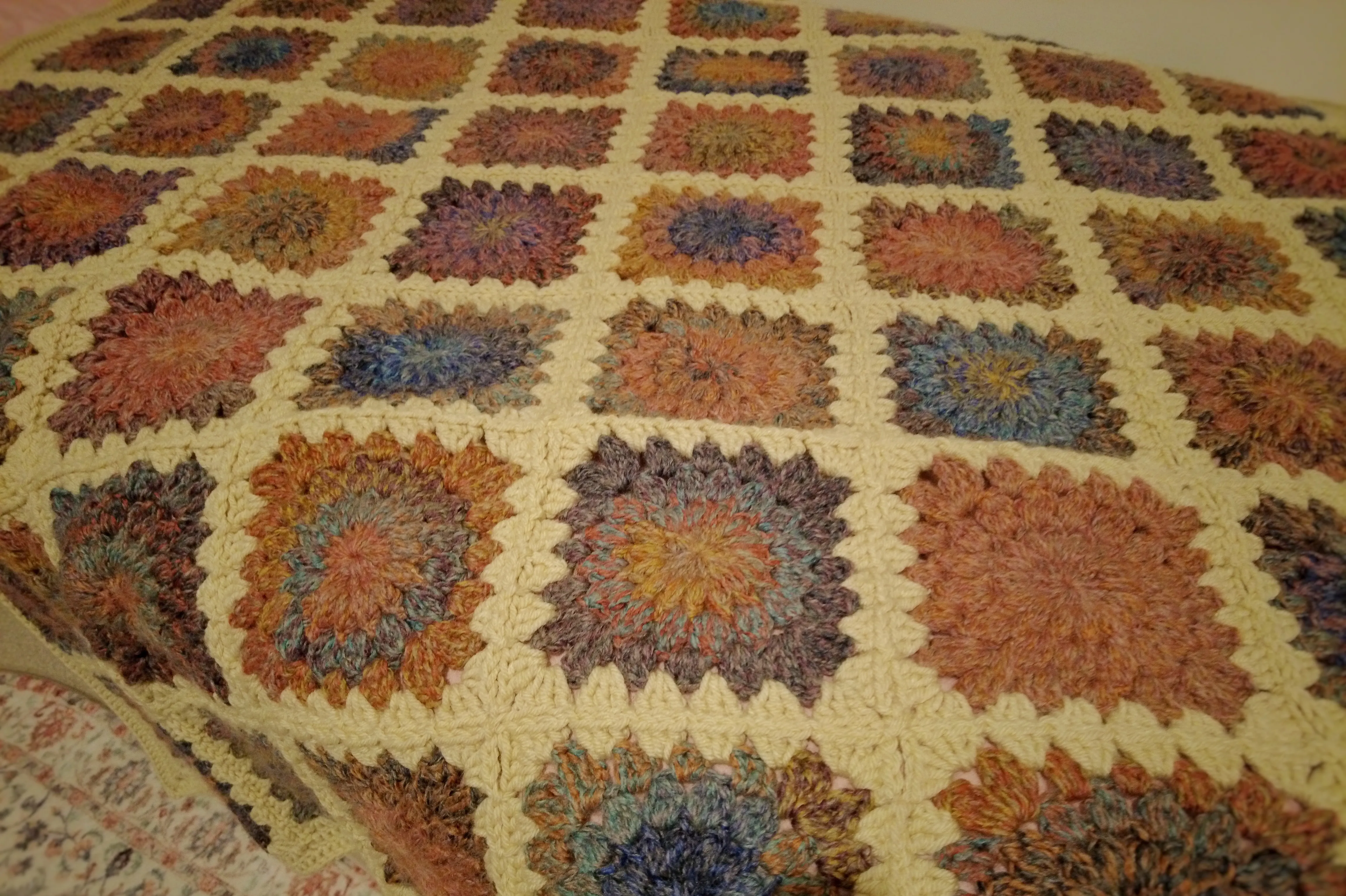
But it’s the only one in the world. Holding it reminds me of making it: sitting in the window seat of a train leaving Waterloo, watching the London skyline shrink away in the glow of the sunset. The size and the colours are perfect because I designed them that way. Every time I see it now it gives me a spark of joy, because I can feel how much time and energy I put into making it exist.
I wouldn’t expect anyone else to feel the same as me. Yeah they’ll see a neat blanket, but they won’t feel that warmth that I get when I hold it. They won’t remember running out of marble yarn, and walking into the haberdashery near their office to order a batch from their stockists because they couldn’t find the right batch online. They won’t notice that one square in the third row that’s a tiny bit wonky because they were tired and miscounted their stitches and didn’t notice until it was too late to go back and fix it.
In fifty years time, their kids aren’t going to be clearing out their Mum’s belongings and find her old crochet blanket, safely folded in her wardrobe. They won’t bring it into their own home and tell her grandkids about how she used to love crochet. How she sat in that sunny window on a crowded commuter train, staring at the skyline on her way back home.
They won’t get that. But I will.